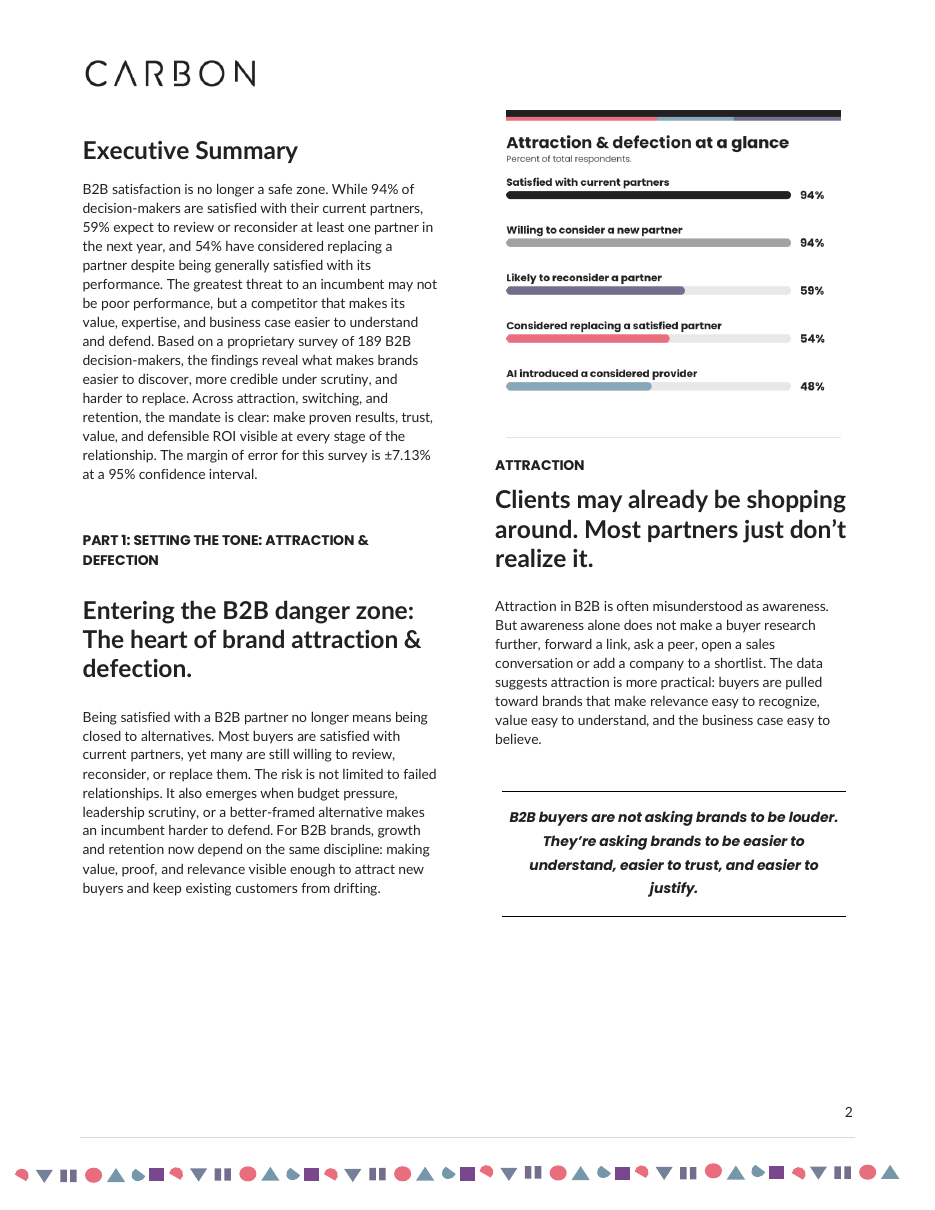
94%
are satisfied with their current partners.
2026 B2B Buyer’s Report
What makes a B2B brand easier to choose and harder to replace? We asked decision-makers nationwide. Their answers expose the gap between satisfaction and loyalty, the growing influence of AI, and the proof buyers need before they stay, switch, or refer.
The satisfaction trap
Most buyers like their current partners. That does not mean they have stopped evaluating what else is out there.
are satisfied with their current partners.
expect to review or reconsider at least one partner in the next year.
have considered replacing a partner despite being generally satisfied.
Three forces changing the shortlist
The report maps where buyer attention starts, what earns serious consideration, and why solid performance can still leave an incumbent exposed.
Professional networks, search, peers, social and AI all shape discovery. Visibility has become a multi-channel requirement.
78% use AI to research partners at least sometimes, and nearly half say it surfaced a provider they might not otherwise have found.
Buyers want proof, trust and value. 41% say results that are good, but not exceptional, hold them back from recommending a partner.
Go deeper with the data
We’ll be hosting a webinar series to walk through the findings, unpack what they mean for B2B leaders, and answer questions about how brands can turn the data into action. Download the report and check the webinar box to receive details as sessions are announced.
Get the report + webinar updates →
Inside the report
AI and B2B agency discovery
Almost half of respondents say AI helped surface a vendor they might not otherwise have found. If your B2B marketing expertise is difficult for AI and people to understand, compare and trust, your agency may never make the shortlist.
See what else buyers revealed →2026 B2B buyer research
Original findings on the B2B buyer journey, customer loyalty, partner evaluation and the growing role of AI in B2B marketing.
AI is becoming a meaningful discovery and research channel in the B2B buying process. In Carbon’s study, 78% of respondents use AI to research partners at least sometimes, and 48% said AI introduced a provider they seriously considered.
Satisfaction does not guarantee loyalty. While 94% of respondents are satisfied with their current partners, 59% expect to review or reconsider at least one partner within the next year and 54% have considered replacing a partner despite being generally satisfied.
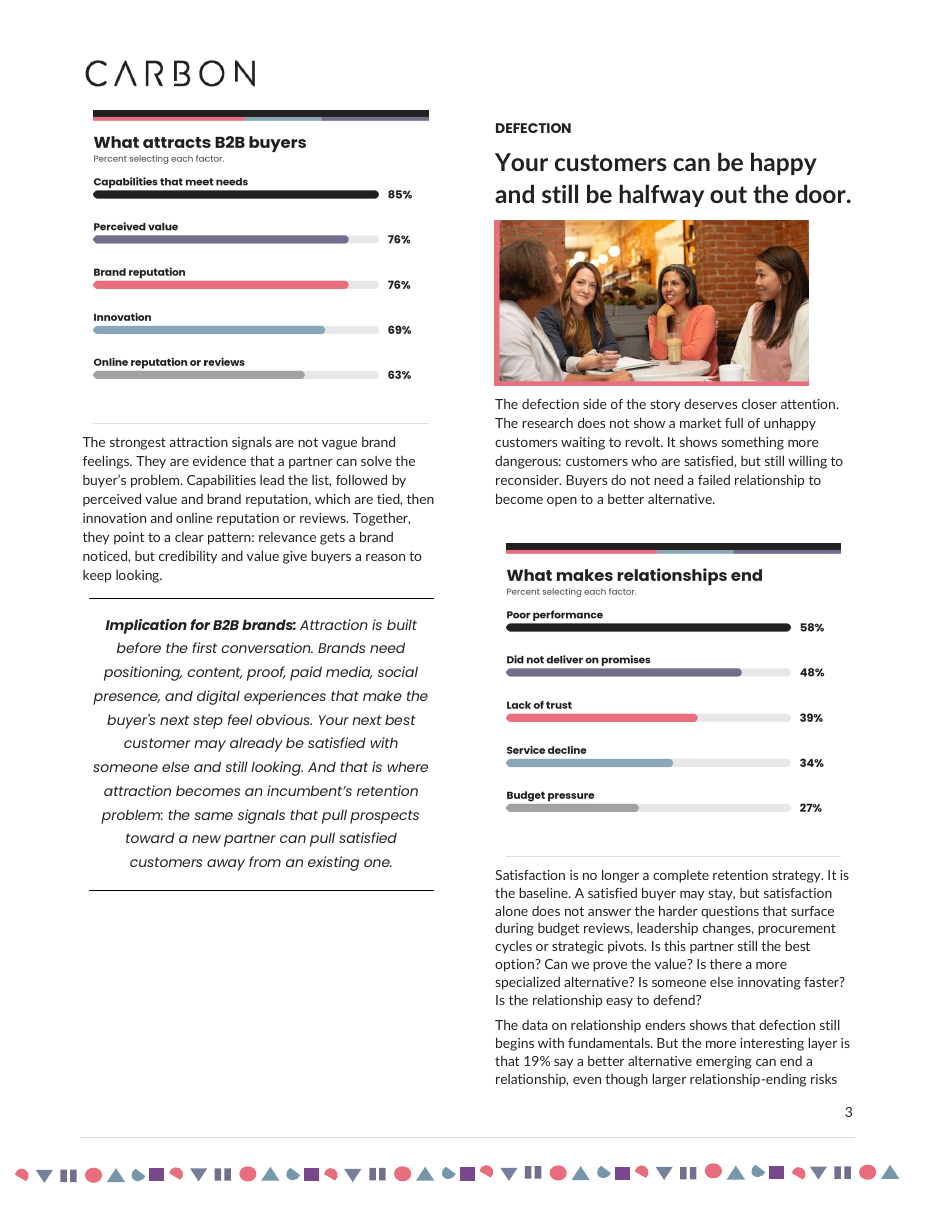
B2B customer loyalty depends on more than acceptable performance. Partners strengthen retention by making their expertise, value, trustworthiness and evidence of results consistently visible throughout the relationship.
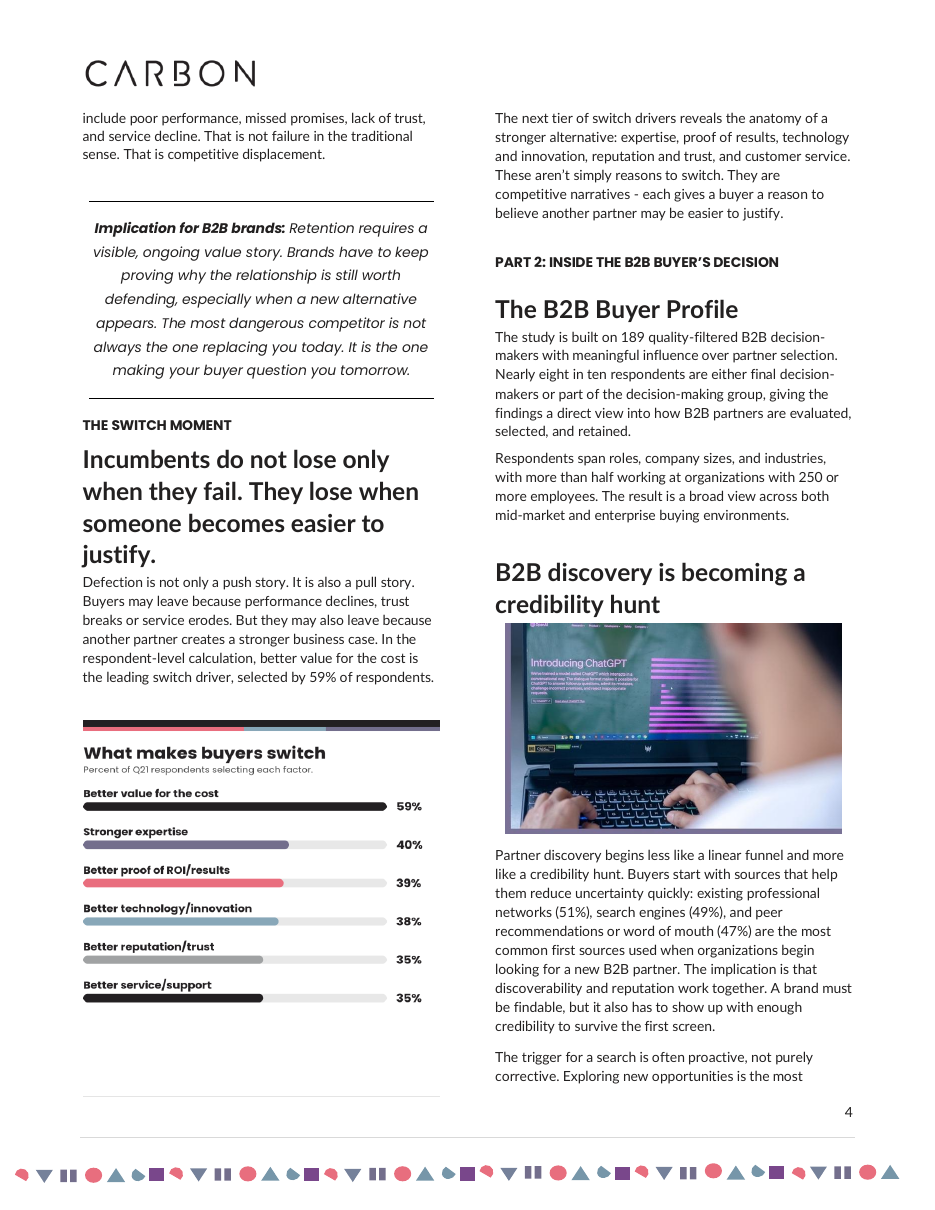
The B2B buyer journey now moves across professional networks, search, peer recommendations, social platforms and AI tools. Buyers compare expertise, proof, value and the strength of the business case before a vendor reaches the shortlist.
Carbon conducted a national proprietary quantitative study of 189 quality-filtered B2B decision-makers involved in selecting, evaluating or managing partners. The findings have a margin of error of ±7.13% at a 95% confidence interval.
Want the complete findings? Download the 2026 B2B Buyer’s Report.